
White Canvas, Notes on Aspect Ratios




White Canvas, Notes on Aspect Ratios
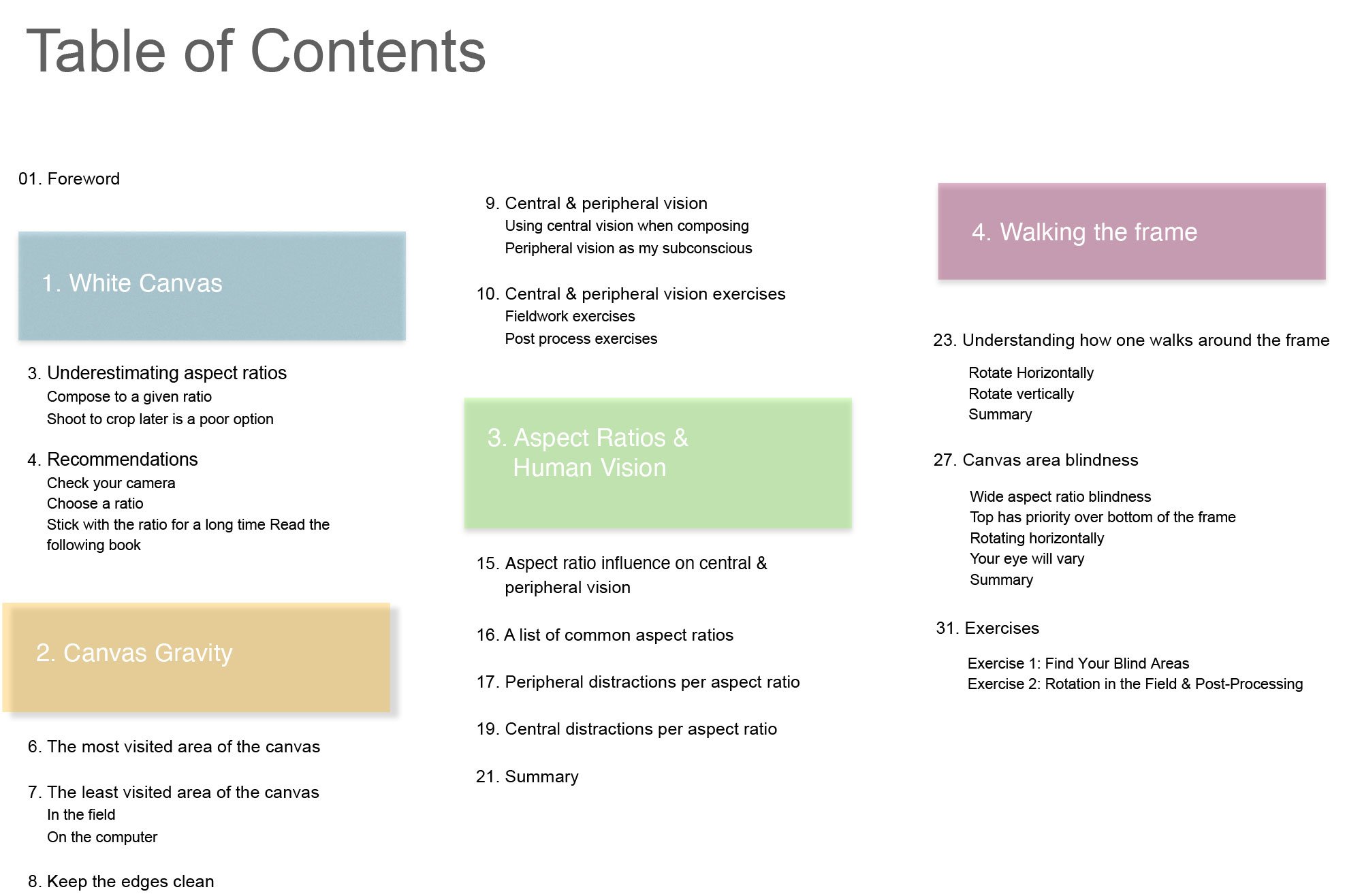
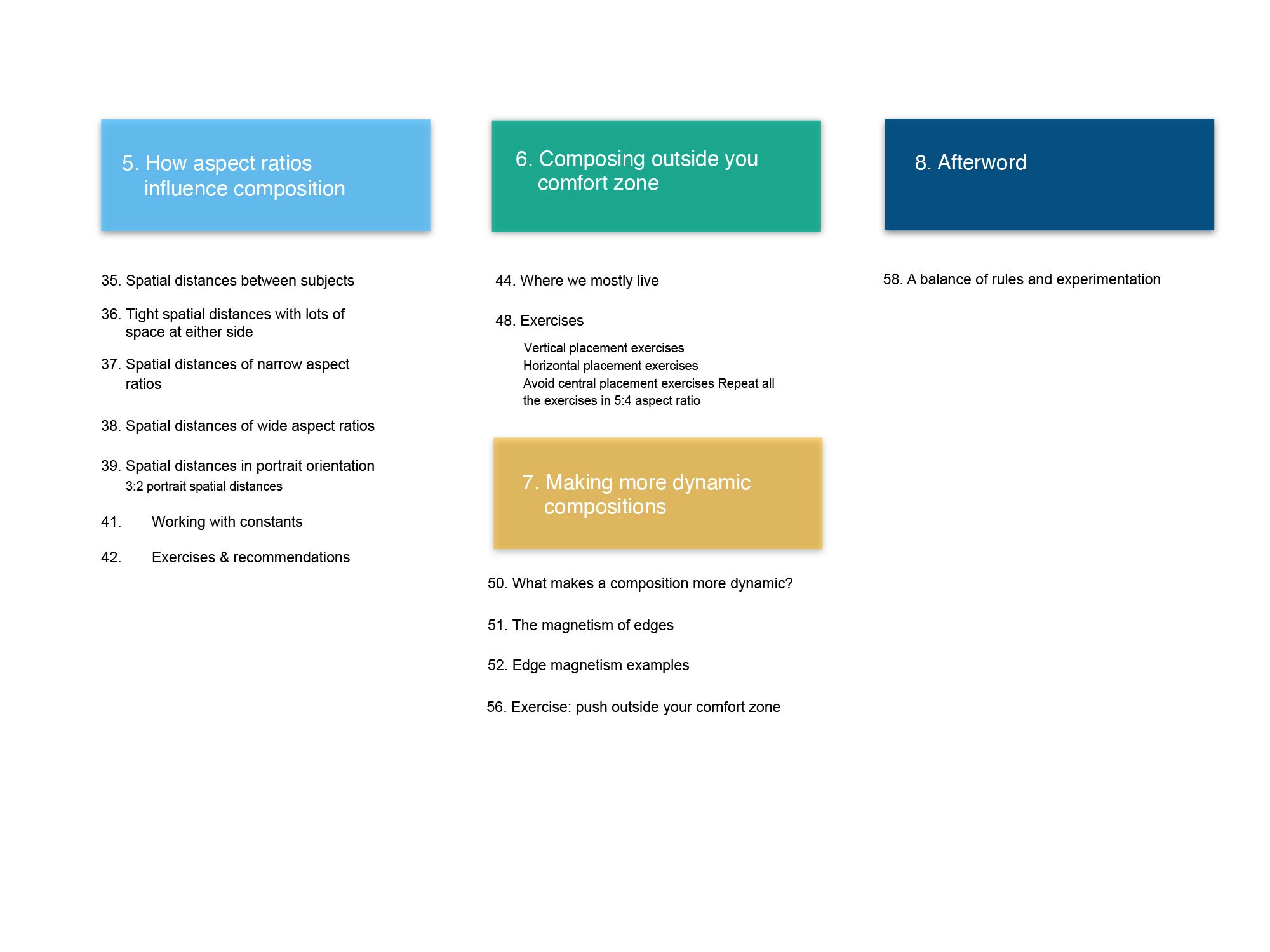
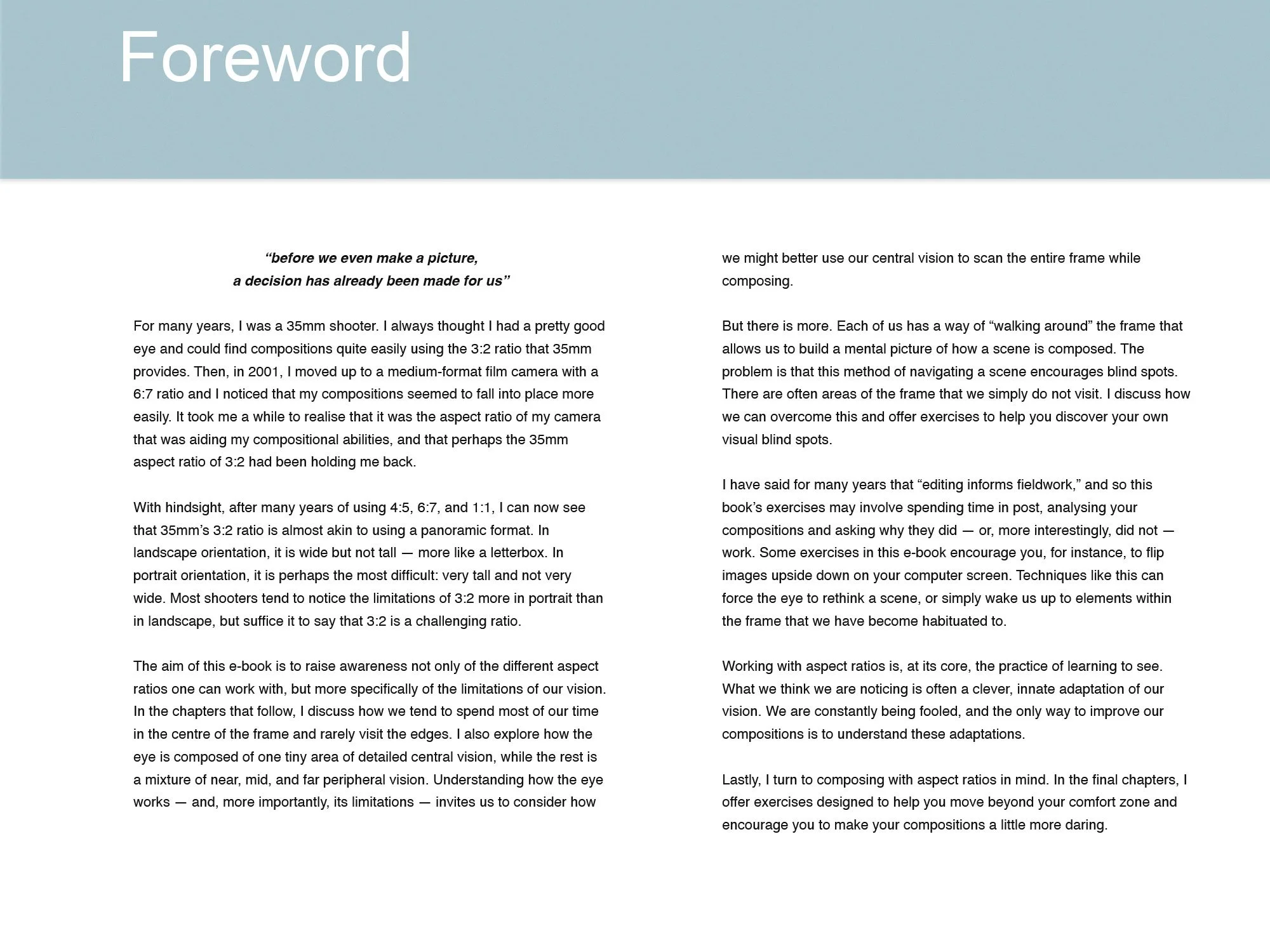
White Canvas: Notes on Aspect Ratios explores how the aspect ratio of our camera fundamentally influences the way we see, compose, and judge photographs. Rather than treating the aspect ratio of your camera as a technical or secondary choice, the book argues that it actively shapes visual perception, eye movement, and compositional decision-making. Through observation, diagrams, and reflective analysis, Bruce demonstrates that different formats subtly encourage different habits—some making composition easier, others introducing hidden challenges.
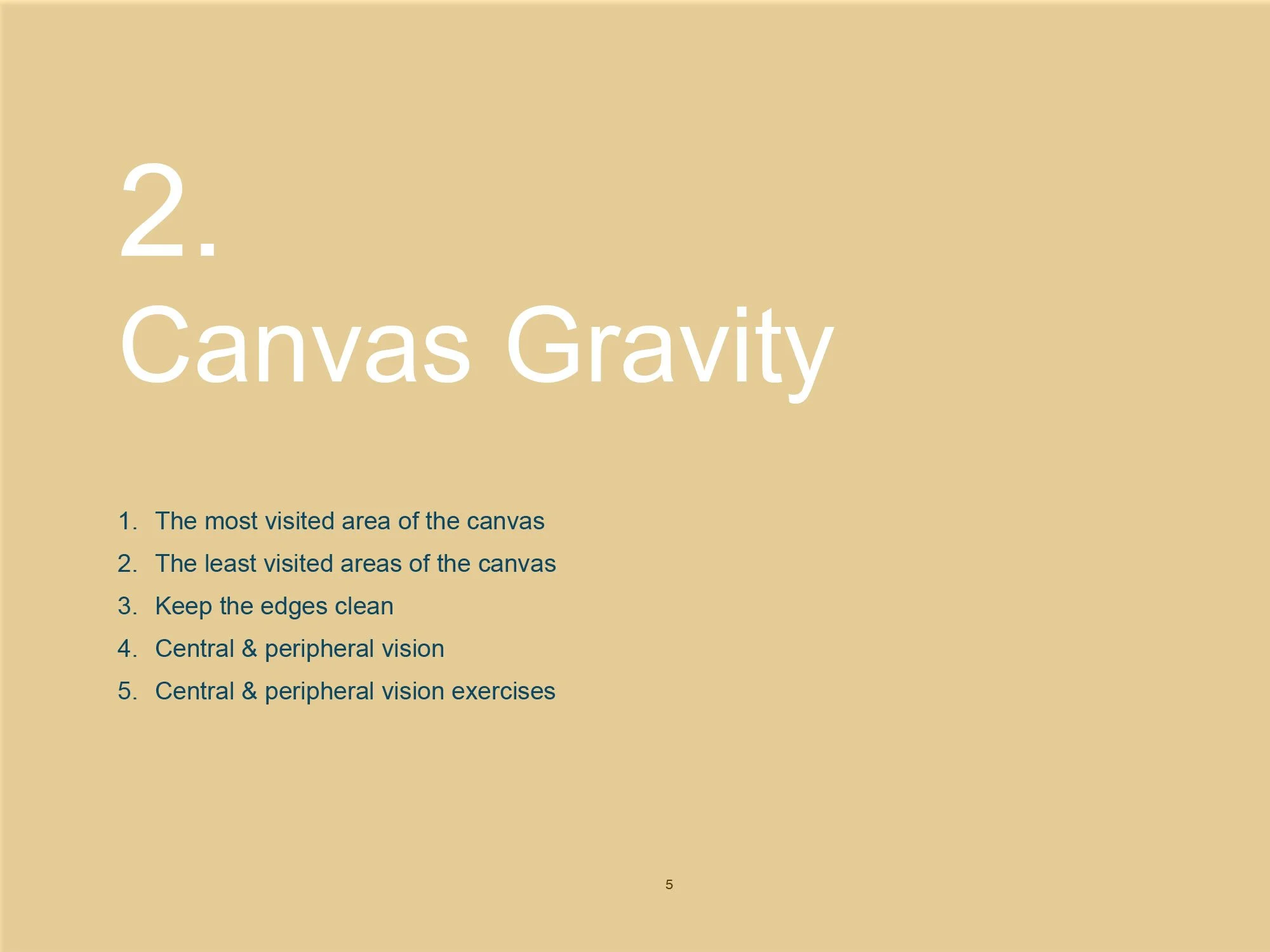
A central theme of the book is visual awareness. It examines how the eye naturally gravitates toward the centre of the frame, how peripheral vision lacks detail, and how this leads photographers—especially beginners—to overlook edge distractions. The discussion extends into how wider aspect ratios exacerbate this problem by increasing reliance on peripheral vision, making errors harder to detect. The book also explores personal “blind spots” in viewing, showing that each photographer has habitual ways of moving through an image, which can vary depending on orientation and aspect ratio.
Practical exercises play a key role throughout. Readers are encouraged to rotate images, review unsuccessful photographs, and even edit upside down in order to abstract form, luminosity, and balance. These techniques are presented not as gimmicks, but as tools for re-educating the eye—forcing it into areas of the frame it might normally ignore. The book repeatedly frames image-making as a process of experimentation rather than success or failure.
Ultimately, White Canvas is not about prescribing a single “correct” aspect ratio. Instead, it advocates for informed choice. By understanding how different ratios influence spatial relationships, visual weight, and attention, photographers can choose formats that align with their intent and working style. The book encourages slower, more deliberate composition and a deeper awareness of how we truly see—both in the field and during image review.